
Raksha Bandhan: Celebrating the Bond of Love and Protection

India, a land known for its diverse festivals and rich cultural heritage, commemorates Raksha Bandhan as a significant occasion to celebrate the unique bond between brothers and sisters. Raksha Bandhan, also known as Rakhi, is a heartwarming festival that symbolizes love, protection, and the enduring connection between siblings.
This ancient Indian tradition holds immense significance in the lives of people across the country and is observed with great joy and enthusiasm.
Rakhi with a Social Message
Raksha Bandhan is not just a festival of love and merriment; it also carries a profound social message. It emphasizes the importance of protection and respect towards women in society. By tying the rakhi, sisters not only express their love for their brothers but also seek assurance of their safety and well-being in a world where women often face challenges and threats.

The festival also highlights the significance of fostering gender equality and promoting a sense of responsibility among brothers to protect and support their sisters in every aspect of life. This beautiful custom serves as a gentle reminder of the vital role that both brothers and sisters play in creating a harmonious and caring society.
Historical and Mythological Roots
Raksha Bandhan has its roots in ancient Indian history and mythology. The festival's origin can be traced back to various mythological stories and historical events. One of the most famous legends associated with Rakhi is that of Lord Krishna and Draupadi.
According to the Mahabharata, when Draupadi tore her sari while being humiliated in the court of the Kauravas, Lord Krishna came to her rescue. He extended an infinite piece of cloth to protect her modesty. Touched by Draupadi's devotion, Krishna promised to protect her from any harm in the future. In return, Draupadi tied a sacred thread, or rakhi, on Krishna's wrist as a symbol of their bond.

These stories showcase the essence of Raksha Bandhan, emphasizing the sacred promise of protection and support that a brother makes to his sister.
The Rituals of Raksha Bandhan
Raksha Bandhan is observed on the full moon day of the Hindu month of Shravana, which usually falls in August. The preparations for this festival begin days in advance, with markets adorned with colorful rakhis and sweets.
Rakhi Tying Ceremony:
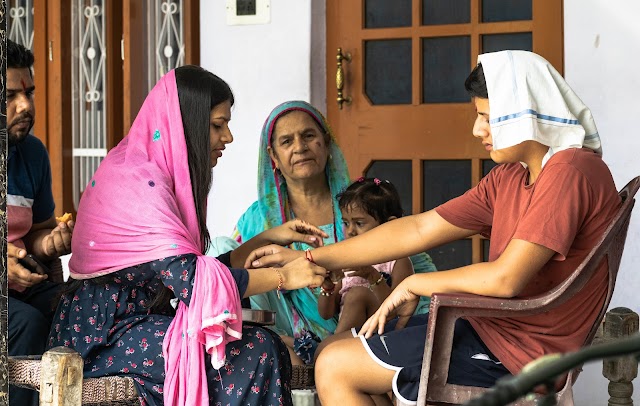
On the day of Raksha Bandhan, the festivities begin with a special ritual. Sisters tie a rakhi, a decorative thread usually embellished with beads, sequins, and sometimes even precious stones, on their brothers' wrists. The rakhi symbolizes the sister's love and good wishes for her brother's well-being and protection. In return, the brother promises to safeguard his sister from any harm and offers her gifts as a token of his affection.
Sweets and Delicacies:
Sweets play a significant role in Indian festivals, and Raksha Bandhan is no exception. After the rakhi tying ceremony, families come together to enjoy delicious sweets and delicacies, reinforcing the spirit of togetherness and love.


Virtual Rakhi:
In modern times, where distances often separate siblings, the spirit of Raksha Bandhan remains unaltered. With the advent of technology, sisters now send virtual rakhis and messages to their brothers who may be far away, ensuring that the bond is cherished despite physical distances.
Celebrating Rakhi Beyond Biological Siblings
While Raksha Bandhan is primarily observed between brothers and sisters by blood, its essence goes beyond biological relationships. In India, people also celebrate Rakhi among cousins, neighbors, and close friends, considering them as siblings of the heart. This practice reflects the spirit of unity, inclusivity, and the sense of a larger family, irrespective of blood ties.


Raksha Bandhan goes beyond celebrating the bond between biological siblings; it encompasses diverse relationships that are akin to the ties of love and protection. It exemplifies the beautiful bond between a brother and a sister, regardless of blood relation. In modern times, Raksha Bandhan is also celebrated among siblings-in-law, strengthening the unity and harmony within families.
Rakhi and Social Harmony
Raksha Bandhan is not just about strengthening the bond between siblings but also holds a broader social significance. It promotes the idea of harmony, love, and respect among individuals of different communities and backgrounds.
In several parts of India, Raksha Bandhan has become a symbol of communal harmony, with people from diverse religious and cultural backgrounds participating in the festivities. During times of social unrest or communal tension, tying rakhis transcends religious barriers and fosters a spirit of unity and brotherhood, reinforcing the cultural fabric of the nation.


Rakhi in Contemporary Times
As society evolves, so do the traditions and celebrations. Raksha Bandhan, too, has adapted to modern lifestyles while preserving its core values. Today, the festival is not just limited to the confines of homes but is also celebrated in schools, colleges, and workplaces.
In schools, students exchange rakhis as a gesture of friendship and unity. Colleges and universities organize cultural programs and rakhi-making competitions, fostering a sense of camaraderie among students from diverse backgrounds.
In offices, female colleagues tie rakhis to their male counterparts, highlighting the importance of professional relationships built on mutual respect and care.
Conclusion
Raksha Bandhan is an exceptional Indian festival that exemplifies the unbreakable bond of love and protection shared between siblings. Rooted in history, mythology, and the essence of unity, this celebration transcends geographical boundaries and embraces people from all walks of life.
As this auspicious occasion approaches each year, let us cherish and embrace the spirit of Raksha Bandhan. May the threads of rakhi not only bind siblings together but also weave a tapestry of love, unity, and compassion that envelops our entire society. Let us celebrate Raksha Bandhan with immense joy, understanding its significance in nurturing the bonds of family and promoting a world where love and protection are cherished above all else.


0 Comments